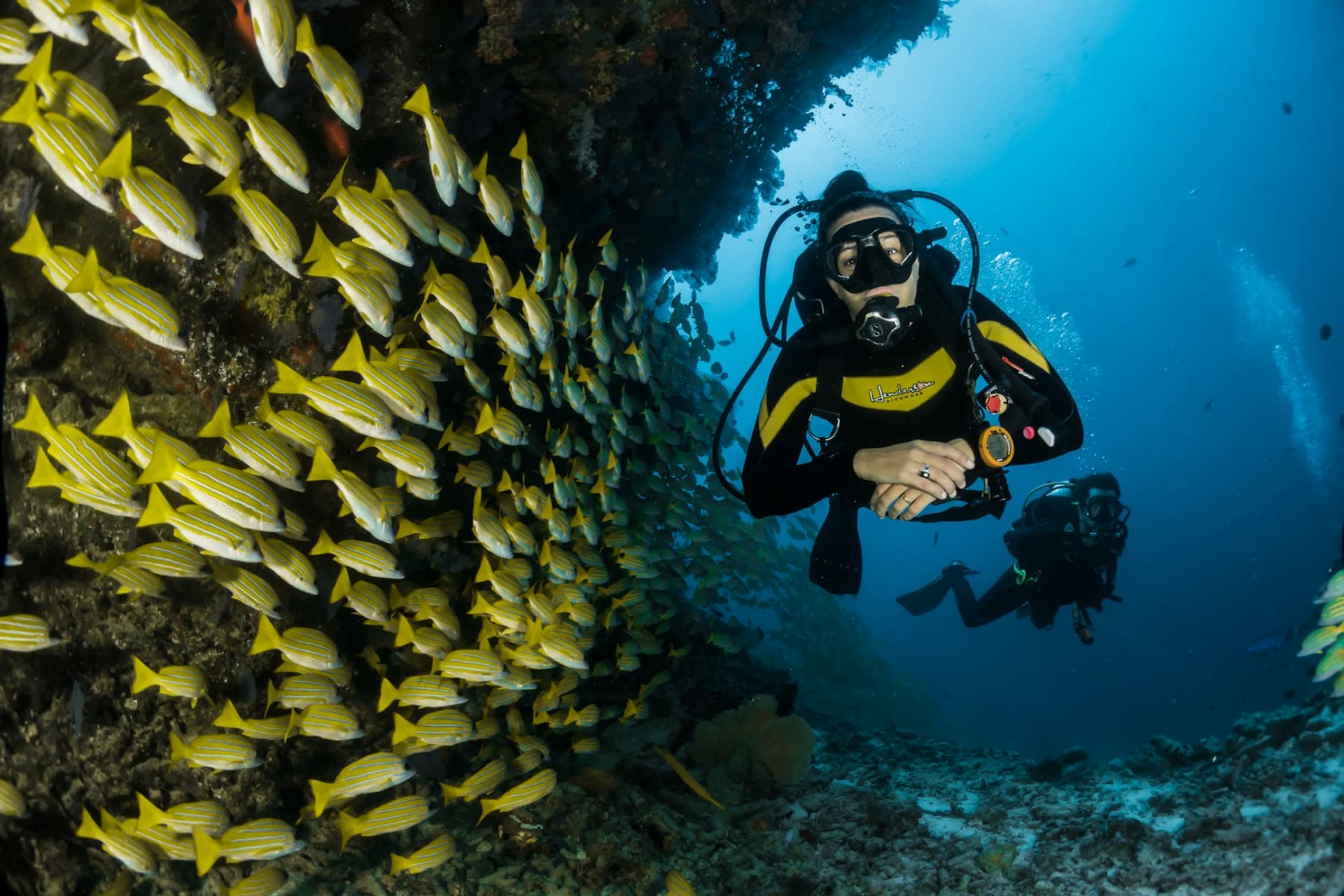
Great Barrier Reef · Cairns and Port Douglas
The reef is not one tour. Choose a format before you choose a boat.
Island, pontoon and dive-boat days solve different problems. Use Marine Park facts from the Reef Authority, then match swimming ability and seasickness to the geometry of the day.
1975
Marine Park created by Commonwealth Act
Reef Authority
1981
World Heritage inscription
Reef Authority / UNESCO context via GBRMPA
~3,000
Coral reefs in the Marine Park
Reef Authority fascinating facts
~600
Continental islands in the Marine Park
Reef Authority fascinating facts
What belongs on the Great Barrier Reef hub
This hub exists to stop you treating “the reef” as one product. From Cairns you can reach vegetated coral cays, sand cays used by seabirds, outer-reef pontoons with semi-submersibles, and mobile snorkel-dive boats that may visit more than one site. Port Douglas sits further north and is often used for ribbon-reef days. Scenic flights and helicopters are a different activity again: they can show you the scale of the lagoon and reef matrix, but they are not a substitute for time in the water.
The Reef Authority is the Australian government agency that manages the Marine Park created in 1975. Its published facts are the ones we repeat: 344,400 square kilometres; about 2,300 kilometres in length; thousands of reefs and hundreds of islands and cays; inshore waters averaging around 35 metres deep, with much greater depths on the continental slope. The Marine Park was inscribed as World Heritage in 1981. Zoning decides where you can snorkel, dive, fish or only look. Your skipper should brief the zone you are actually visiting. Do not copy a colour from a blog and assume it applies to tomorrow’s site.
Best reef tour type from Cairns?
Match the day to swimming ability, seasickness, children, and how long you want to be at one site.
Island or sand cay. You step onto land. Water near a cay can be shallow, which helps first-time snorkellers and some families. Green Island is a national park cay with rainforest-like vegetation on coral rubble and sand. Michaelmas Cay is a well-known seabird cay — stay off the roosting areas and follow the briefing. These days still involve a vessel crossing; they are not “no boat”.
Pontoon or floating platform. These sit on outer reef systems and often bundle a semi-submersible, underwater viewing, and a large entry platform. They suit mixed-ability groups who want time on a stable deck and a single site rather than several jumps. They are usually a longer steam from Cairns than Green Island.
Snorkel-dive boat. You enter from the vessel, often at more than one site. This is the better match for confident swimmers who want water time more than an island walk. It is usually a poorer match for non-swimmers and for people who already feel ill in the Cairns inlet.
There is no official “best boat”. There is a best fit. Rewrite any old “best package” URL in your notes as a format question, then confirm the live itinerary with the operator.
Cairns, Port Douglas, and why the map is not optional
Cairns departures typically head east to inner islands and then further to outer reefs used by pontoon and dive operations. Port Douglas departures sit closer to some northern ribbon reefs, including names you will see on heritage URLs such as Agincourt. That is geography, not a quality score. A Moore Reef pontoon day and an Agincourt ribbon-reef day can both be excellent in the right wind; they are not interchangeable when someone in your group cannot climb a ladder.
Look at a zoning map on the Reef Authority website. Look at a marine forecast on BOM. Look at whether your group wants shade, a glass-bottom boat, a certified dive, or a beach. Then read the specific chooser pages: snorkelling, diving, islands, Agincourt vs Moore, and Green Island vs the outer reef.
What we will not tell you
We will not quote a fare. We will not say which company is “the best”. We will not promise turtles, minke whales or “perfect vis”. Wildlife and water clarity are conditions, not inclusions. We will not invent how many millimetres of rain fell last March. Check BOM. We will not treat a 2015 school-holiday post as a calendar.
We will tell you to ask: how far offshore, how long at the site, how you enter the water, what happens if you do not swim, what the stinger-suit policy is, whether cameras are hire, soak or bring-your-own, and what the weather cancellation looks like in writing.
Before you pay a deposit on any reef day from Cairns or Port Douglas, read the operator’s current trip notes and the relevant official page. Confirm inclusions, vessel type, time at the site, snorkel or dive supervision, stinger-suit policy, transfers, and weather cancellation rules. The Reef Authority publishes zoning and responsible reef practices; Queensland Parks publishes island and rainforest park conditions; the Bureau of Meteorology publishes the forecast you should actually travel on. None of those agencies sell the tour, and this guide does not either.
Safety for reef and island days sits with you, the licensed operator, and the agencies that manage the place. Queensland Government guidance is that marine stingers occur in tropical waters year-round and the higher-risk season is typically November to May. Swim between the red-and-yellow flags on patrolled beaches, use stinger nets where provided, and consider a full-body lycra suit. If stung, leave the water, call Triple Zero (000), and pour vinegar on the sting as described by Queensland Health and Surf Life Saving Queensland. In the Daintree, Cape Tribulation and other estuary country, follow Be Crocwise: stay out of the water, keep back from the water’s edge, and believe the signs. Cassowaries are wild birds; give them space and never feed wildlife in the Wet Tropics.
How to use this hub without turning it into a shop
The reef is not one tour. Choose a format before you choose a boat. is a choice architecture, not a checkout. Read the answer at the top, then the geometry, then the official source that actually owns the rule. If you need a seat, leave this domain and speak to a licensed operator. If you need a second opinion on format, use the internal links: Snorkelling chooser, Diving from Cairns, Islands and cays, Reef tour tree
Cairns sits between the Great Barrier Reef Marine Park — 344,400 square kilometres, about 2,300 kilometres long, with some 3,000 reefs, as published by the Reef Authority — and the Wet Tropics of Queensland World Heritage Area, listed on 9 December 1988 over 894,516 hectares according to the Wet Tropics Management Authority. Those two facts are why a week here can feel like two trips. They are also why stacking every famous name into one sunrise is how people remember the coach.
Stinger-season conduct is published by the Queensland Government and Surf Life Saving Queensland: risk is higher typically from November to May, stingers can be present year-round, swim between the flags, consider a full-body lycra suit, pour vinegar, call Triple Zero (000). Estuary conduct is Be Crocwise. Cassowaries get the road. None of that is a reason to skip Tropical North Queensland. It is the price of being a guest in a living system.
When a heritage URL on this site still lists an operator, treat the name as a clue to a format. Confirm the living product. Ignore frozen prices. That is the entire commercial ethic of the rebuild.
What we refuse to invent
Prices. Rankings. Live availability. Wildlife guarantees. Rainfall totals that did not come from BOM. Visitor counts that did not come from an agency. Opening hours that we have not verified this week. If a sentence needs one of those numbers to work, the sentence is deleted. What remains is how to choose The reef is not one tour. Choose a format before you choose a boat. so the day matches the group you actually travel with.
Why this corner of the north stays on the itinerary
Scale you can only see on a map
A 2,300-kilometre system means your Cairns day is a local sample, not the whole reef. That is why site type matters more than a slogan.
Zoning is the real rulebook
Green, yellow and other zone colours are legal instruments. Get the briefing for the site you visit.
Inner cay versus outer platform
Travel time, water depth, landing and facilities change the day more than marketing copy does.
Port Douglas is a different jetty
Northern ribbon-reef access is a location choice. Compare logistics, not mythical ‘better coral’ scores.
Questions visitors actually ask
Direct answers first. Confirm the live detail with official sources before you book.
What is the best reef tour type from Cairns?
The best type is the one that matches swimming ability, seasickness and whether you want land, a pontoon, or multiple in-water sites. There is no official ranking of operators.
How far is the Great Barrier Reef from Cairns?
Inner islands such as Green Island are a shorter crossing than outer-reef pontoon and dive sites. Distances vary by site; confirm the destination named on your ticket and allow a full day for outer-reef products.
Do I need to be able to swim?
Many pontoon and island days offer viewing from a semi-submersible or glass-bottom boat. In-water snorkelling still assumes you can be comfortable in the sea with a flotation aid. Dive-boat days assume more confidence. Ask the operator how non-swimmers spend the day.
What belongs on the Great Barrier Reef hub?
Format choice, Marine Park facts, Cairns versus Port Douglas geography, links to snorkel and dive choosers, and a clear refusal to invent prices or wildlife guarantees.
Still matching a day to your group?
Send a planning question. This is an editorial inbox, not a reservations desk.
Cairns Tour Info (cairnstourinfo.com.au) is an independent editorial visitor guide. It is not affiliated with, endorsed by, or operated by Tourism Tropical North Queensland, the Great Barrier Reef Marine Park Authority (Reef Authority), the Wet Tropics Management Authority, Queensland Parks and Wildlife Service, the Bureau of Meteorology, Queensland Health, Surf Life Saving Queensland, or any tour operator, cruise company, airline, railway, cableway, park, island resort or attraction named on these pages. All trademarks, registered names, product names and logos remain the property of their respective owners and are used here only to identify publicly known places, operators and services. This website does not sell tickets, does not operate tours, and does not take bookings. Information is general and may change. Confirm marine park zoning, permits, weather, marine stinger risk, crocodile safety, opening hours, inclusions and prices with official sources and licensed operators before you travel.